Financial Risk Intelligence · FAIR™ Methodology · NIS2 & DORA Ready

Cyber Risk Quantification — Understand Your Risk in Financial Terms

Transform complex technical vulnerabilities into clear financial impact metrics. Empower your board, CFO and CISO to make risk-informed investment decisions — confidently. Serving Belgium and Europe.

FAIR™
Open Standard
5-Step
Proven Process
€/$
Financial Output
30+
Years Experience
FAIR™ Methodology
NIS2 & DORA Compliant
Monte Carlo Simulation
Results in Weeks
Vendor-Neutral
What is CRQ?

Moving Beyond Red-Amber-Green Risk Ratings

Traditional risk assessments deliver qualitative scores — "High", "Medium", "Low" — that leave boards with critical questions unanswered: How much could we actually lose? Is our current security spending justified? Are we prioritising the right controls?

Cyber Risk Quantification (CRQ) answers those questions in the language of business: money. Using the internationally recognised FAIR (Factor Analysis of Information Risk) standard, we model your specific threat scenarios and calculate probable financial exposure ranges your leadership can directly act on.

The result is a bridge between the CISO's technical reality and the CFO's balance sheet — enabling evidence-based decisions about where to invest in security and how much risk remains acceptable.

Get Your Free CRQ Assessment
FAIR — Factor Analysis of Information Risk
× × + CYBER RISK (ALE) Loss Event Frequency × Loss Magnitude Loss Event Frequency How often a loss event occurs Loss Magnitude Financial impact per event (€/£/$) Threat Event Frequency (TEF) How often threats occur Vulnerability (V) Likelihood of threat success Primary Loss Direct financial impact Secondary Loss Fines, reputational harm
TEF×V=LEF
PLM+SLM=LM
LEF×LM=ALE (€)
The CRQ Advantage

Qualitative vs Quantitative Risk Assessment

See why leading CISOs and boards are abandoning colour-coded risk matrices in favour of financially quantified cyber risk analysis.

DimensionQualitative (Traditional)Quantitative (CRQ / FAIR)
Risk ExpressionHigh / Medium / Low€ annualised loss expectancy
Board CommunicationRequires technical translationNative financial language
Investment JustificationSubjective prioritisationROI per control in €
Risk ComparisonCannot compare across domainsDirectly comparable in money
Regulatory AlignmentPartial (checkbox compliance)NIS2, DORA, ISO 27001 ready
Insurance SupportLimited underwriting valueCredible actuarial data
Cognitive BiasHigh — subjective ratingsLow — calibrated estimates
RepeatabilityVaries by assessorStandardised FAIR taxonomy
Why CRQ Matters

Six Reasons Organisations Choose to Quantify Cyber Risk

From board-level communication to operational prioritisation, CRQ unlocks capabilities that qualitative assessments simply cannot provide.

Board-Level Communication

Speak the language of the boardroom. Present cyber risk in financial terms — annualised loss expectancy, Value-at-Risk — that resonate with executives and directors.

ROI on Security Investments

Justify security spend with hard numbers. Compare the cost of a control against the risk reduction it delivers — expressed as euros saved per year.

Risk-Based Prioritisation

Stop fixing everything at once. Rank vulnerabilities and scenarios by financial impact to focus remediation efforts where they matter most.

Risk Appetite Definition

Define clear, measurable risk tolerance statements. Align your security posture with organisational appetite using quantified thresholds instead of vague colour codes.

Regulatory & Insurance Alignment

Support NIS2, DORA, and GDPR compliance reporting. Provide insurers with credible risk data to optimise cyber insurance premiums and coverage terms.

Continuous Risk Monitoring

CRQ is not a one-time exercise. We establish living models that update as your environment, threat landscape, and business context evolve — keeping risk visibility current.

Who Benefits

CRQ Delivers Value to Every Stakeholder

Whether you're a CISO justifying budget, a CFO assessing exposure, or a board member overseeing governance — CRQ speaks your language.

CISO / IT Security

Translate technical risk into business impact.

  • Justify security budgets with ROI data
  • Prioritise remediation by financial impact
  • Report to the board in business terms
  • Benchmark against industry baselines

CFO / Finance

Understand cyber exposure in monetary terms.

  • Assess probable annual loss exposure
  • Optimise cyber insurance coverage & premiums
  • Validate security investment effectiveness
  • Integrate cyber risk into ERM frameworks

Board / Executive Committee

Oversee cybersecurity with financial clarity.

  • Receive clear, non-technical risk reports
  • Set measurable risk appetite thresholds
  • Fulfil governance obligations (NIS2, DORA)
  • Compare cyber risk to other business risks

Risk Manager / GRC

Elevate your risk programme with quantified data.

  • Adopt an open, auditable risk standard (FAIR)
  • Map quantified risks to compliance frameworks
  • Produce defensible regulatory reports
  • Track risk reduction over time
Our Methodology

FAIR-Based Quantification — Open Standard, Proven Results

L-KA Group leverages FAIR (Factor Analysis of Information Risk), the only internationally recognised standard for cyber risk quantification published by The Open Group (OpenFAIR™). FAIR provides a rigorous, repeatable taxonomy for decomposing risk into measurable components.

We combine FAIR with Monte Carlo probabilistic simulation to model the full range of potential outcomes — giving you not just a point estimate, but a probability distribution of losses so leadership can understand both likely and worst-case scenarios.

Our approach is vendor-neutral, framework-agnostic, and integrates seamlessly with ISO 27001, NIST CSF, CIS Controls, MITRE ATT&CK, and NIS2 programmes already in place.

Start Your Assessment
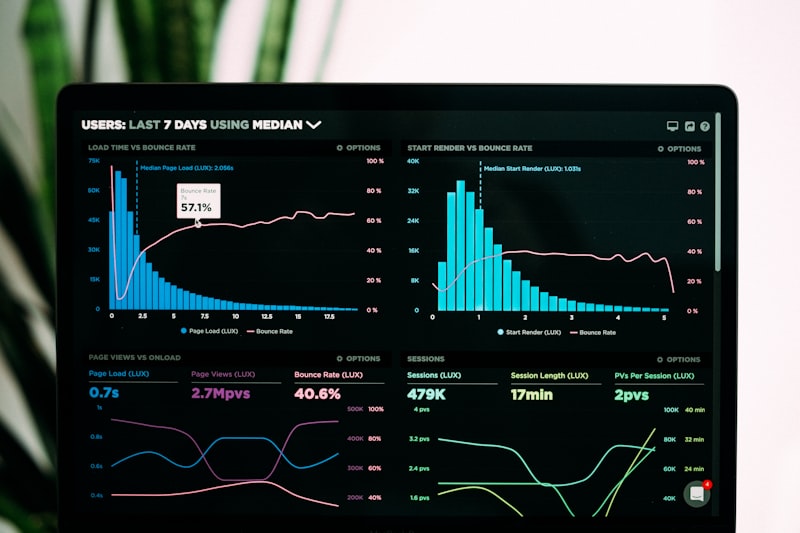
Data analytics dashboard with financial risk metrics
FAIR Layer 1

Risk Decomposition

We decompose risk into its primary components: Threat Event Frequency (TEF), Vulnerability, Primary Loss Magnitude, and Secondary Loss Magnitude — building a causal model specific to your environment.

FAIR Layer 2

Threat Scenario Modelling

We identify and model realistic threat scenarios tailored to your industry and asset profile — ransomware, supply chain compromise, insider threat, data exfiltration — using threat intelligence relevant to your sector.

FAIR Layer 3

Probabilistic Simulation

We run Monte Carlo simulations across your risk scenarios, generating annualised loss distributions. You receive a min/max/most-likely range of expected financial exposure — not a single misleading number.

FAIR Layer 4

Control Effectiveness Analysis

We model the risk-reduction benefit of proposed or existing controls, enabling direct comparison of control cost versus risk reduction in monetary terms — the foundation of an evidence-based security roadmap.

FAIR Layer 5

Executive Reporting & Risk Communication

All findings are translated into clear executive dashboards, risk registers denominated in euros and regulatory heat maps — designed to inform board decisions without requiring technical expertise to interpret.

Regulatory Compliance

CRQ Supports Your Compliance Obligations

Quantified risk data satisfies the most demanding European and international regulatory frameworks. Our CRQ outputs map directly to these requirements.

NIS2

NIS2 Directive

EU cybersecurity regulation for essential and important entities — mandatory since October 2024.

  • Risk-based security measures (Art. 21)
  • Incident reporting obligations
  • Supply chain risk management
  • Board-level accountability
DORA

DORA Regulation

Digital Operational Resilience Act for financial entities — applicable since January 2025.

  • ICT risk management framework
  • ICT incident classification & reporting
  • Third-party risk management
  • Resilience testing requirements
ISO 27001

ISO 27001:2022

International standard for information security management — the gold standard for ISMS.

  • Risk assessment & treatment (Clause 6.1)
  • 11 new controls in Annex A update
  • Continuous improvement evidence
  • Statement of Applicability support
GDPR

GDPR / Data Protection

EU General Data Protection Regulation — requires appropriate security measures based on risk.

  • Data Protection Impact Assessments
  • Appropriate technical measures (Art. 32)
  • Breach notification risk assessment
  • Accountability & documentation
Our Process

A Rigorous 5-Step CRQ Engagement

From scoping to board-ready deliverables — a structured, efficient engagement designed to deliver actionable results in weeks, not months.

Discovery & Scoping

Identify critical assets, business processes, and relevant threat actors. Define scope, data classification, and regulatory context.

Threat Modelling

Map realistic threat scenarios to your asset inventory using industry threat intelligence, existing vulnerability data, and MITRE ATT&CK.

FAIR Analysis

Apply the FAIR taxonomy to each scenario — estimating frequencies, vulnerability rates, and loss magnitudes using calibrated expert elicitation.

Financial Modelling

Run Monte Carlo simulations to produce annualised loss distributions. Model control effectiveness and investment trade-offs.

Reporting & Roadmap

Deliver executive dashboards, technical risk registers, and a prioritised remediation roadmap with cost-benefit analysis for each recommendation.

Deliverables

What You Receive at the End of Every Engagement

Concrete, actionable outputs your security team and board can immediately use to drive decisions and demonstrate security programme effectiveness.

Executive Risk Dashboard

A visual, board-ready summary of your top risk scenarios with annualised loss exposure, confidence intervals, and trend indicators — no technical background required to interpret.

Quantified Risk Register

Your risk register re-expressed in financial terms. Each item includes probable annual loss, worst-case exposure (VaR), and risk reduction potential from proposed controls.

Prioritised Remediation Roadmap

A ranked list of security investments ordered by risk reduction ROI — showing which controls deliver the greatest financial benefit per euro spent.

Monte Carlo Simulation Reports

Detailed outputs per threat scenario: probability curves, loss distributions, and sensitivity analyses showing which risk factors drive the greatest uncertainty.

Regulatory Alignment Mapping

Cross-reference of quantified risks against NIS2, DORA, ISO 27001, and GDPR obligations — supporting compliance reporting and regulatory dialogue.

Live FAIR Model (Optional)

A maintained quantitative risk model your team can update as threats, infrastructure, or business context changes — enabling continuous, real-time risk monitoring.

30+
Years Combined Experience
3–6 wks
Initial Assessment Delivery
€/$
Financial Risk Output
100%
Vendor-Neutral Approach
FAQ

Frequently Asked Questions about Cyber Risk Quantification

Cyber Risk Quantification (CRQ) is the process of evaluating cybersecurity risks in financial terms using the FAIR (Factor Analysis of Information Risk) methodology. Instead of qualitative High/Medium/Low ratings, CRQ expresses risk as probable financial loss — enabling boards and CISOs to make data-driven investment decisions about cybersecurity controls and strategy.

A focused initial CRQ assessment — covering 3–5 priority threat scenarios — can be completed in 3 to 6 weeks. A full enterprise-wide quantification programme typically spans 2 to 4 months depending on organisational complexity, data availability, and the number of scenarios in scope.

FAIR (Factor Analysis of Information Risk) is the only internationally recognised open standard for cyber risk quantification, published by The Open Group. We use it because it provides a transparent, repeatable taxonomy that decomposes risk into measurable components — enabling probabilistic financial modelling. It's vendor-neutral and integrates with any existing security framework (ISO 27001, NIST CSF, CIS Controls).

No. CRQ can be performed at any stage of security maturity. For organisations at earlier stages, CRQ often serves as the foundation for building a risk-prioritised security programme, rather than layering on top of one that already exists.

We work with whatever data is available — existing vulnerability assessments, asset inventories, incident history, audit reports, and insurance information all add value. For inputs where hard data is scarce, we use calibrated expert elicitation, a standard FAIR technique for generating reliable probability estimates even with limited historical data.

A penetration test identifies technical vulnerabilities. A standard risk assessment qualifies them as High/Medium/Low. CRQ goes further — it translates those vulnerabilities into expected financial loss, enabling you to compare the cost of the risk against the cost of remediation and make rational economic decisions. CRQ complements both exercises; it does not replace them.

Yes. NIS2 requires risk-based security measures and incident reporting for essential and important entities. DORA mandates ICT risk management for financial entities. CRQ provides the quantitative risk assessment framework that satisfies these regulatory requirements, supporting compliance reporting, audit evidence, and board-level governance obligations.

Absolutely. Insurers increasingly request quantified risk data during policy underwriting and renewal. A CRQ report provides credible, methodology-backed financial risk estimates that can support more accurate coverage scoping and, in many cases, negotiate more favourable premium terms.

Ready to put a financial figure on your cyber risk?

Book a no-obligation discovery call with our CRQ team. We'll identify your highest-priority risk scenarios and outline a tailored assessment approach.

Request Your Free Discovery Call
Contact

Request a CRQ Assessment

Get in touch with our team to discuss your organisation's risk quantification needs. We'll respond within one business day to arrange your discovery call.

Address

Rue des Champs 144
4460 Grâce-Hollogne, Belgium

Book a CRQ Discovery Call